
The short answer: 5G is the high-speed network you likely use today; 6G is its planned successor, targeting commercial service around 2030. 5G was mostly about faster phones; 6G aims to be an intelligent, sensing network with terahertz frequencies and far lower latency. Here is what the research and standards work actually say. In this guide, we break down 5g vs 6g in plain English — what it is, how it works, and how to use it.
Definition: 6G (IMT-2030) — 6G is the sixth generation of mobile network technology, developed under the ITU’s IMT-2030 framework published in late 2023. It is not a finished product: it is in the research and standardization phase, with 3GPP targeting initial specifications around 2028 and first commercial deployments around 2030.
5G Vs 6G: What is 5G, and where does it stand today?
5G is the fifth generation of mobile networks, standardized under the ITU’s IMT-2020 vision. Its official performance targets are downlink peak data rates of 20 Gbps and uplink peaks of 10 Gbps, with user-experienced rates of at least 100 Mbps down and 50 Mbps up, and latency as low as 1 millisecond for critical applications. 5G was designed to work across frequencies from 450 MHz up to 52 GHz, combining wide-coverage sub-6 GHz bands with short-range, high-capacity millimeter-wave (mmWave) bands in the 24–100 GHz range, and to support up to one million connected devices per square kilometre.
In practice, 5G is still being built out. The industry is now rolling out 5G-Advanced, which introduces early versions of 6G-bound features like AI-driven optimization and integrated sensing. Much of what 6G promises will arrive gradually, not all at once in 2030.
What is 6G supposed to be?
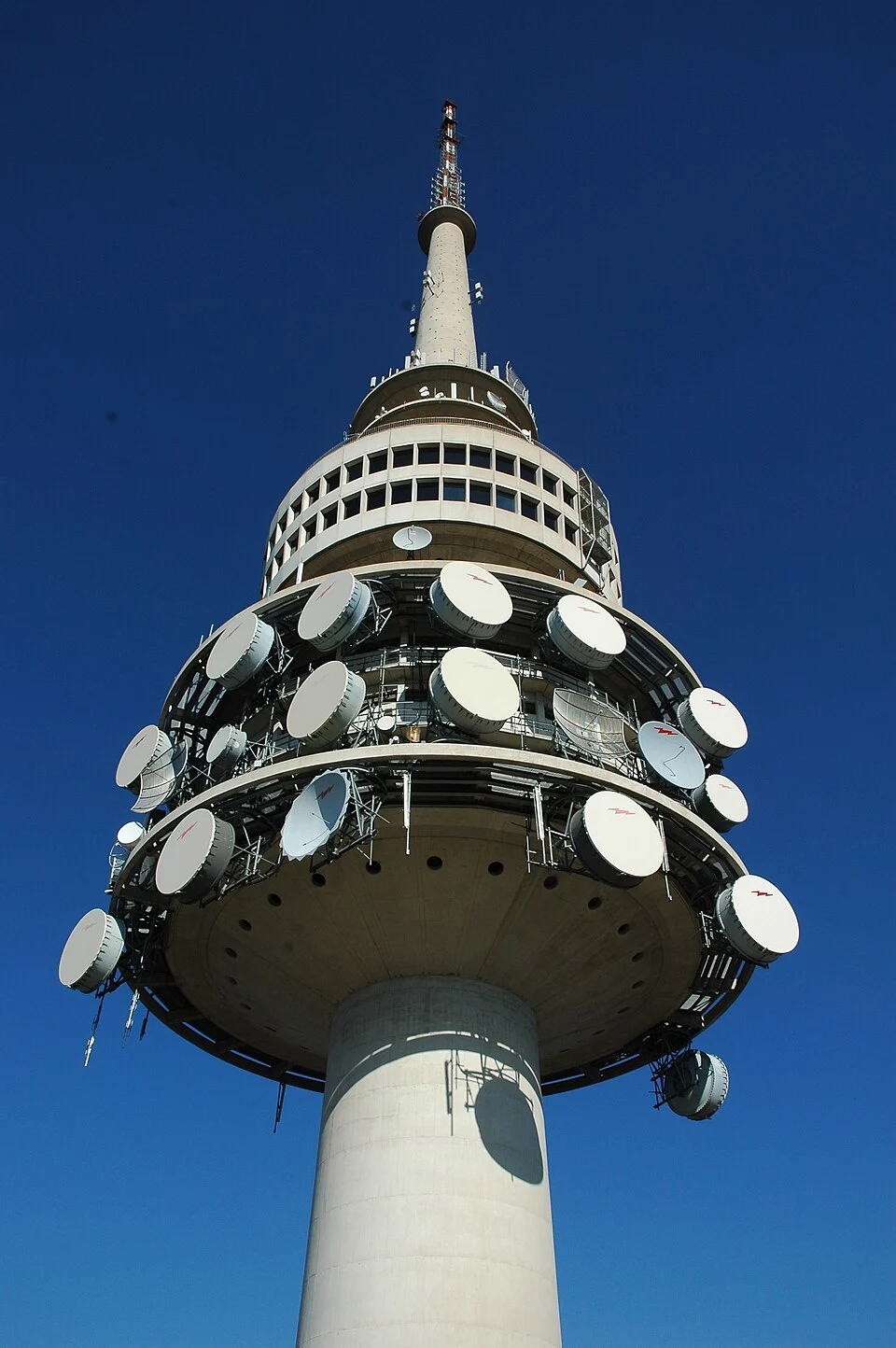
6G is the sixth generation of wireless technology, still in the early research and development phase. In late 2023, the International Telecommunication Union (ITU) published the first official framework for it — IMT-2030 (Recommendation ITU-R M.2160) — which sets the vision and performance targets the final standard must meet, including scenarios like immersive communication and integrated sensing.
The key idea: 5G was largely a faster data pipe. 6G is intended to be an AI-native, sensing network — one where intelligence is built into the core of the system and radio signals transmit data and sense the environment at once.
How do 5G and 6G compare?
Below: ITU’s IMT-2020 requirements for 5G versus the IMT-2030 vision targets for 6G. Treat the 6G column as design goals — the standard does not exist yet.
| Capability | 5G (IMT-2020) | 6G (IMT-2030 target) |
|---|---|---|
| Peak data rate | 20 Gbps down / 10 Gbps up | 50–200 Gbps (talk of up to 1 Tbps) |
| User-experienced rate | 100 Mbps down / 50 Mbps up | 300–500 Mbps |
| Latency (radio) | 1 ms (ultra-reliable mode) | 0.1–1 ms |
| Connection density | 1 million devices/km² | 1 million to 100 million devices/km² |
| Spectrum efficiency | Baseline (30 bit/s/Hz peak) | 1.5–3× better than 5G |
| Mobility support | Up to 500 km/h | Up to 1,000 km/h |
| Positioning accuracy | ±10 cm | 1–10 cm |
| Frequency range | 450 MHz – 52 GHz | Adding terahertz (up to ~3 THz) |
Sources for the targets: the ITU IMT-2030 capability table and ISPreview’s breakdown of the IMT-2030 framework. Laboratory experiments using terahertz frequencies have already demonstrated rates of hundreds of gigabits per second — early hints of what the physics allows.
Why does 6G need terahertz frequencies?

Speed comes from bandwidth, and bandwidth lives in higher frequencies. 5G added millimeter-wave spectrum (24–100 GHz) on top of the sub-6 GHz bands. 6G plans to go higher still, into the terahertz (THz) range — roughly 100 GHz to 3 THz — spectrum that is largely unused today. Terahertz waves, between millimeter-wave and infrared radiation, can carry enormous amounts of data, but they travel only short distances and are easily blocked by walls, rain, and even foliage.
That tradeoff is why 6G will need extremely dense small-cell networks and techniques like reconfigurable surfaces that steer signals around obstacles. Higher frequencies are a tool, not a magic wand: the physics makes coverage harder, not easier.
What new things will 6G actually make possible?
Beyond raw speed, three 6G ideas are genuinely new:
- Integrated sensing and communication (ISAC). 6G radios can sense their surroundings while transmitting — detecting objects, mapping rooms, and tracking movement without extra sensors. Think warehouses that track inventory with the network itself, or streets that help cars “see” around corners.
- AI-native networks. Instead of AI bolted on as a management tool, 6G designs bake AI into the air interface and core: self-optimizing, self-healing networks that allocate spectrum and beams in real time.
- Ubiquitous coverage via space. 6G’s “ubiquitous connectivity” scenario blends terrestrial towers with Satellite Internet: Starlink vs Amazon Kuiper Explained/”>satellite networks, aiming for service everywhere — including oceans, deserts, and the skies above commercial air routes.
On top of these come the headline applications: holographic communication, true digital twins of factories and cities, brain-computer interfaces with instant feedback, and swarms of robots coordinating with guaranteed, consistent latency.
When is 6G actually coming? (The timeline)
The milestones so far:
- Late 2023: ITU publishes the IMT-2030 vision framework.
- June 2025: 3GPP formally begins 6G technical studies (Release 20), running roughly 18–21 months.
- 2027–2028: Release 21 produces the first normative 6G specifications, targeting a functional freeze around the end of 2028.
- 2029–2030: Technology proposals go to the ITU, with formal IMT-2030 approval expected around late 2030 to early 2031.
- ~2030: First commercial 6G deployments, likely in limited areas like dense cities and campuses — not nationwide launches.
One notable detail: unlike 5G, which launched in a non-standalone mode riding on 4G, the industry intends 6G to be standalone from day one, with radios and core able to run independently of 5G. That also means operators will want to migrate to 5G Standalone first to smooth the transition.
Will 6G make 5G obsolete?
No — not for a long time. Each new “G” coexists with its predecessor for a decade or more, and 5G is expected to remain the main coverage layer while 6G starts in select areas. Much of the 6G toolkit is also arriving early through 5G-Advanced, so 5G investment today is not wasted. Expect phones to fall back to 5G outside 6G coverage — exactly as 5G phones do with 4G today.
What about security?
6G’s deeper integration of AI, sensing, and billions of devices expands the attack surface, and the standards community knows it. Building security into the system from day one was one of the key principles from 3GPP’s early 6G workshops. The sensing capabilities raise new privacy questions too — a network that can map your living room needs strong guardrails. These are being debated in the standards now, before the technology ships. For how devices already keep biometric data private, see How Face ID Works: Apple’s Biometric Security Explained/”>how Face ID biometric security works.
What should you do now?
For most people: nothing. Keep buying 5G phones and services — they will serve you well into the 2030s. For businesses, the practical move is to follow the sensing and AI features arriving through 5G-Advanced now, and favor 5G Standalone deployments that lay the foundation for 6G later. And if you ever wondered how an industry settles on one standard for everyone, the story of What Is USB-C? The One-Cable Standard Explained/”>USB-C becoming the one-cable standard previews the politics ahead.
Frequently asked questions
When will 6G be available?
The industry’s working target is commercial 6G service around 2030, with trials in the late 2020s. 3GPP aims to finish the first specifications around 2028; widespread coverage will likely take until the mid-2030s.
How much faster will 6G be than 5G?
ITU IMT-2030 targets include peak data rates of 50–200 Gb/s (talk of up to 1 Tbps) and user-experienced rates of 300–500 Mbps, versus 5G’s 20 Gbps peak and 100 Mbps user-experienced targets. Real-world speeds will be far lower, just as with 5G.
Will I need a new phone for 6G?
Yes, eventually. 6G will use new frequency bands, waveforms, and a standalone architecture, so existing 5G phones won’t connect to 6G networks. The good news: early 6G networks will coexist with 5G for years, so a 5G phone bought today won’t become useless when 6G launches.
What will 6G enable that 5G can’t?
Sensing and intelligence, not just speed. 6G is designed for integrated sensing (the network maps its surroundings), AI-native operation, centimeter-level positioning, and up to ten times 5G’s device density — enabling holographic calls, digital twins, and coordinated robot swarms.
Is 5G obsolete now that 6G is coming?
Not at all. 5G is still being built out and upgraded through 5G-Advanced, and industry timelines show 5G remaining the main coverage layer well into the 2030s while 6G launches in select areas. The technologies being tested for 6G are already arriving through 5G-Advanced.
What should businesses do about 6G right now?
Nothing urgent, but plan ahead. Migrate to 5G Standalone where it makes sense, since 6G is intended to be standalone-only and will build on that foundation. Businesses with sensing, automation, or dense IoT needs should follow the integrated-sensing-and-communication (ISAC) work now, because it’s arriving through 5G-Advanced before 6G.

Developers, designers and marketers who build websites, software, apps and automations for businesses worldwide. Our editorial policy

2 comments