
The short answer: Temple is a small, pill-shaped wearable that sticks to your temple and tries to do something no consumer gadget has done before — continuously track changes in brain blood flow. Built by Zomato founder Deepinder Goyal, it uses a light-based sensing system called BrainFlow and converts readings into a proprietary score called Entropy. Early studies — small, company-run, not yet peer-reviewed — show promising correlations with clinical equipment, but experts caution that an optical sensor on skin is not the same as measuring the brain. In this guide, we break down brain-sensing wearables in plain English — what it is, how it works, and how to use it.
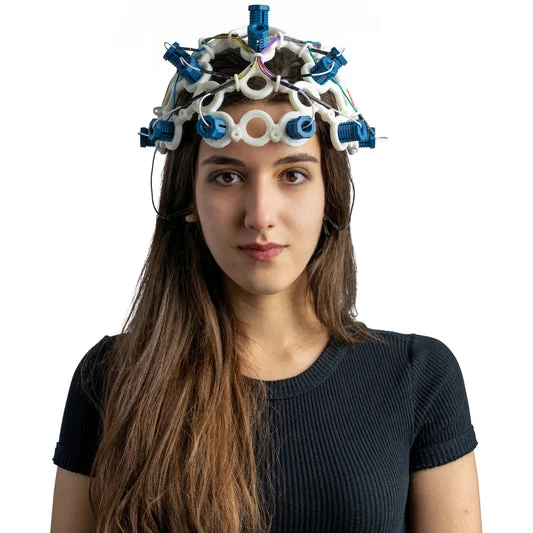
Definition: A brain-sensing wearable is a non-invasive device worn on or near the head that estimates brain-related signals — the brain’s electrical activity (EEG sensors) or changes in brain blood volume and oxygenation (optical sensors like PPG or NIRS). They are built for continuous everyday wellness tracking, not medical diagnosis.
What is Temple, exactly?
Temple is a health-tech wearable from a new venture by Zomato founder Deepinder Goyal, who stepped back from the company (now Eternal) to build it. It is a compact, pill-shaped module worn on the side of the head — the temple area — rather than on the wrist.
There is no strap or ring sizing: Temple sticks to the skin with disposable adhesive Grips (replaced every 2–3 days, supplied free), runs about seven days per charge, and survives workouts, showers, and swimming — but not scuba diving. Goyal unveiled it on Raj Shamani’s podcast, PV Sindhu has been seen wearing it, and pre-orders opened in October 2026 after 100 founding units shipped in May 2026 (Digit.in, The CSR Journal).
How can a sensor on your temple claim to measure brain blood flow?
Temple reportedly uses a form of photoplethysmography (PPG) — the same light-based sensing technology found in smartwatches. PPG shines light (usually green LEDs) into the skin and measures the reflection; blood absorbs light, so each pulse changes the reflection, producing a waveform converted into metrics like heart rate, as Live Science explains.
Temple’s twist is location: sensors over the superficial temporal artery feed its proprietary BrainFlow system, which aims to track signals more closely related to cerebral blood volume than wrist PPG. Temple claims real-time blood flow, oxygenation, cognitive load, and its Entropy metric — what Goyal calls the first continuous wearable measurement of cerebral blood flow. It rises with exercise, cold exposure, and meditation, and drops with prolonged sitting and dehydration.
What do Temple’s validation studies actually show?
Temple’s two company-run validation studies are both preprints awaiting peer review:
Study 1: Temple vs. transcranial Doppler (23 adults)
The first study compared Temple’s Brain Flow Index (Temple-BF) against transcranial Doppler (TCD) ultrasound — the gold standard for cerebrovascular function — in 23 healthy adults, measuring middle cerebral artery velocity (MCAv) during cycling and posture changes. Per Gadgets360, Temple tracked heart rate with ~4% error and showed strong temporal associations with TCD — e.g., lying down made heart rate fall but brain flow rise, and Temple captured both.
Crucially, the study’s own conclusion says the association does not conclusively prove Temple measures brain flow — the readings could partly come from tissue around the temporal region.
Study 2: Temple vs. time-domain NIRS (60 participants)
The second study tested Temple BrainFlow against time-domain NIRS — which can separate brain from scalp blood volume changes — in 60 participants across three challenges: head-down tilt, stand-to-squat, and stand-to-supine. Temple reported brain blood volume correlations of r = 0.84–0.91, well above scalp correlations (head-down tilt: 0.91 brain vs. 0.49 scalp). Advised by Prof. David Boas, Director of Boston University’s Neurophotonics Center; Goyal says Temple will loan devices to qualified researchers for independent testing.
What is the Entropy score?
Temple condenses its sensor data into Entropy — a live 1–250 score of physiological demand, Temple’s “cost of being alive” (per Digit.in reports:
- 1–50: deep rest and meditative states
- 50–150: everyday activity
- 150–250: intense exercise, physical stress, or mental stress
The score also responds to caffeine and digestion, reflecting autonomic nervous system activity rather than steps or calories. The crucial caveat: Entropy is a proprietary company metric, not an established medical measurement — treat it as an experimental wellness signal, not a diagnosis of fatigue, focus, or brain health.
How is Temple different from a smartwatch or smart ring?
Wrist wearables measure what your body does (steps, heart rate, sleep). Temple tries to measure how it responds — via blood-flow signals near the head:
| Device type | Where it’s worn | What it senses | Key signal | Medical status |
|---|---|---|---|---|
| Temple | Temple (side of head) | Optical blood-flow changes at the temple (BrainFlow) | Cerebral blood volume estimate; Entropy score | Experimental; studies not yet peer-reviewed |
| Smartwatch | Wrist | PPG, SpO2, motion, sometimes ECG | Heart rate, steps, sleep, workouts | Consumer wellness |
| Smart ring | Finger | PPG, skin temperature | Sleep, recovery, readiness | Consumer wellness |
| EEG headband/earbuds | Forehead or ears | Electrical brain activity (EEG) | Focus, relaxation, sleep stages | Consumer wellness; some FDA-cleared |
Temple’s own example: when you lie down, a smartwatch sees your heart rate fall — but not your brain blood flow rise. That is the gap Temple claims to fill, though its blood-flow number is still the least independently validated in the table.
Can an optical sensor really see the brain? What skeptics say
The core scientific question is physical: the sensor sits on skin, while the brain sits behind skull and tissue. Experts quoted in Digit.in’s analysis question how much a non-invasive optical sensor can capture about deeper cerebral blood flow — a caveat Temple’s first study itself acknowledges. Some viral videos claim Temple only picks up superficial skin signals, but those are commentary, not peer-reviewed rebuttals.
Bottom line: correlation is promising but not proof of measurement. Temple’s NIRS study is a serious attempt to answer the main objection — but until independent researchers replicate the results, Temple remains an experimental wellness device.
What’s next for brain-sensing wearables?
Temple bets on optical sensing; a second front of brain-sensing wearables measures the brain’s electrical activity (EEG) instead. In 2026, that front moved fast:
- Neurable — raised $35M in Series A and licenses its AI-powered EEG tech for headphones, hats, glasses, and headbands (partnered with HP’s HyperX on a gaming headset); user neural data is anonymized and used for AI training only with consent, per TechCrunch.
- NAOX — France’s Naox Technologies got FDA 510(k) clearance for its in-ear EEG system for clinicians (NAOX Link) and unveiled consumer EEG earbuds (NAOX Wave) at CES 2026 ( Diagnostics World News).
- NextSense — a Google X spinoff that began shipping truly wireless EEG earbuds (Smartbuds) in February 2026 at $399 for early birds. Unlike passive trackers, they use six EEG sensors plus precisely timed audio stimulation to actively guide the brain into deeper sleep.
- Muse-style headbands — forehead-worn EEG headbands for meditation and focus were the first consumer brain-sensing wearables to go mainstream.
The pattern: two lanes — optical blood-flow sensing (Temple) and electrical brainwave sensing (EEG earbuds, headbands) — both leaning on on-device AI, like How Live Translation Works in Google Translate shows for neural networks on devices. Both benefit as 5G vs 6G: What’s Next for Mobile Networks connectivity cheapens continuous syncing, while Satellite Internet: Starlink vs Amazon Kuiper Explained-style coverage could keep wearables connected anywhere.
Should you buy Temple?
Temple is ambitious and genuinely novel — but still an experimental wellness wearable, not a medical instrument. Consider it if you’re a quantified-self enthusiast comfortable with the expected Rs 75,000–1 lakh price (Digit.in) and no subscription. But you stick a device to your head with adhesive Grips replaced every few days, and the biggest claims still await independent, peer-reviewed validation.
For proven brain sensing today, EEG options with clearer validation histories are the safer bet. For the blood-flow frontier, Temple is the device to watch — after peer review.
Frequently asked questions
What is Temple’s BrainFlow technology?
BrainFlow is Temple’s proprietary optical sensing system: sensors over the temple’s superficial temporal artery estimate blood-volume changes linked to cerebral blood flow, oxygenation, cognitive load, and the Entropy score. It is not an established clinical measurement.
Has Temple been clinically proven to measure brain blood flow?
No. Two small, company-run studies — 23 adults vs. transcranial Doppler ultrasound, 60 participants vs. time-domain NIRS — are posted as preprints awaiting peer review. The first study’s own conclusion says the results do not conclusively prove Temple measures brain flow.
Does Temple replace medical brain scans or diagnoses?
No. Temple is an experimental wellness wearable. It cannot replace medical-grade tools like transcranial Doppler, MRI, or clinical neurological assessments, and Entropy is not an established medical measurement.
What is the Entropy score?
Entropy is Temple’s proprietary 1–250 score of real-time physiological demand — what the company calls the “cost of being alive.” Scores of 1–50 mean deep rest and meditation; 150–250 mean intense exercise or physical and mental stress. It also responds to caffeine and digestion.
How much does Temple cost, and how do you wear it?
Reports place the expected price around Rs 75,000 to Rs 1 lakh, with no subscription. It attaches to the temple with disposable adhesive Grips (replaced every 2–3 days) and handles workouts, showers, and swimming — not scuba diving.
How is Temple different from EEG-based brain wearables?
Temple uses optical sensing to estimate blood-flow changes near the head; EEG wearables (Muse headbands, NextSense Smartbuds, NAOX Wave, Neurable-powered headphones) measure the brain’s electrical activity. Different signals: blood volume vs. brainwaves.

Developers, designers and marketers who build websites, software, apps and automations for businesses worldwide. Our editorial policy
1 comment