
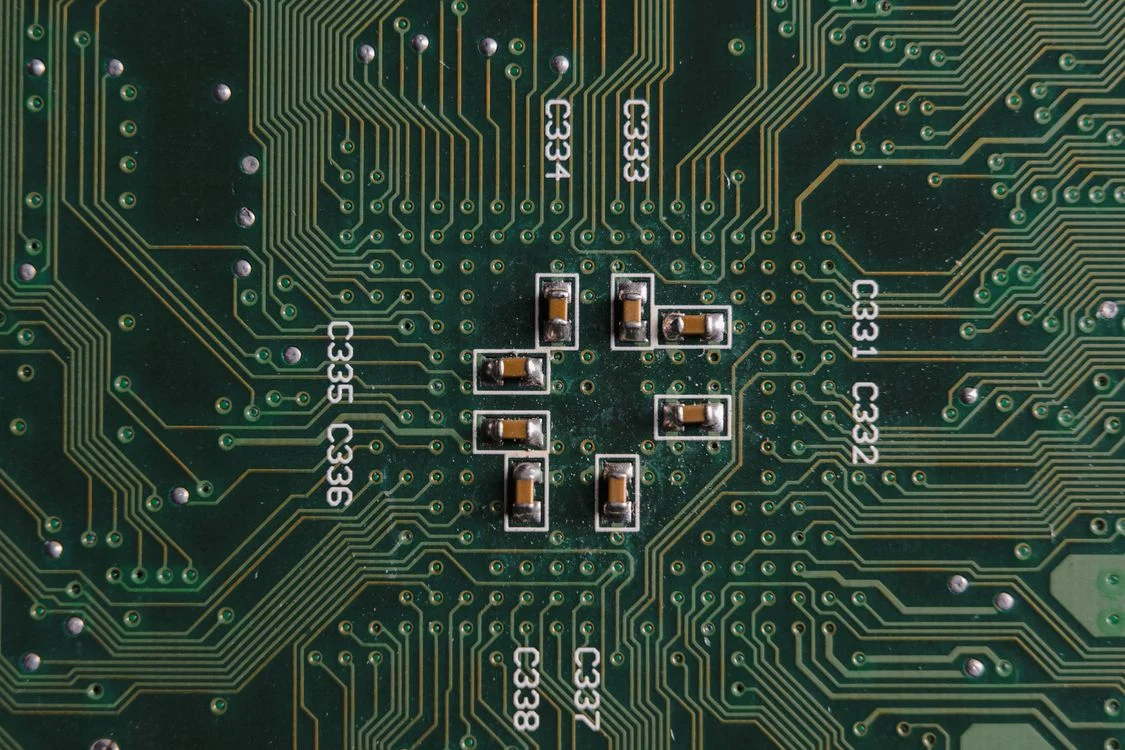
Bottom line: Apple’s M6 is its first computer chip built on a 2-nanometer manufacturing process — meaning smaller transistors, better efficiency, and more AI power in the same space. Announced on August 25, 2026 and already shipping in the new Mac mini, it packs a 12-core CPU, a 12-core GPU, and Apple’s first-ever dual Neural Engine for on-device AI. In plain English: it’s the biggest leap in an entry-level Mac chip since Apple started making its own silicon in 2020. In this guide, we break down m6 chip apple next in plain English — what it is, how it works, and how to use it.
M6 Chip Apple Next: What is the Apple M6 chip?
The Apple M6 is a system-on-a-chip (SoC) — a single piece of silicon that combines the CPU, GPU, memory controller, and AI accelerator into one unit — designed by Apple for the Mac. It is the sixth generation of Apple Silicon and the first Apple chip manufactured using TSMC’s 2nm process. It debuted in the redesigned Mac mini in September 2026 and is expected in the iMac, 14-inch MacBook Pro, and eventually the MacBook Air.
Why is the M6 chip such a big deal?
Three reasons, all connected.
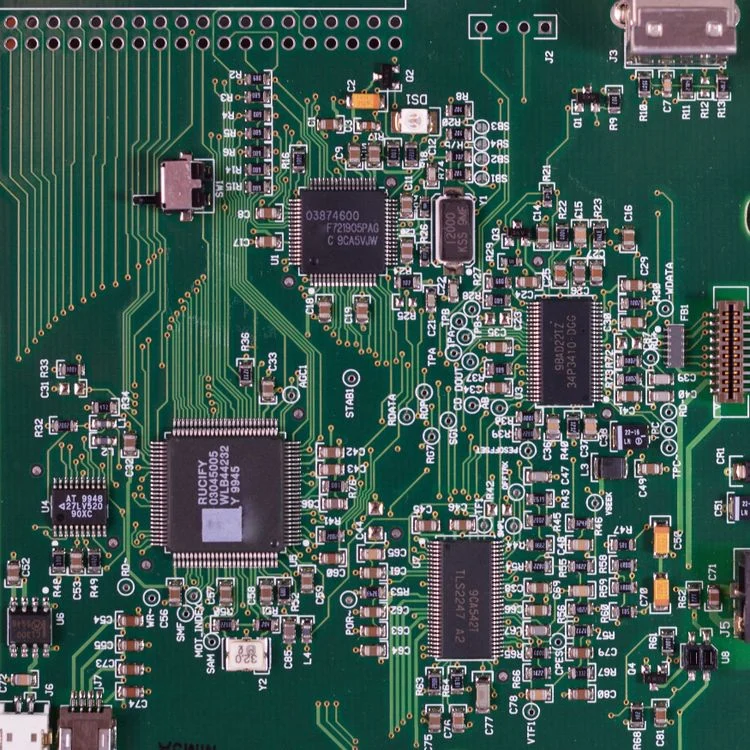
First, the 2nm process. Chip “process” size describes how tightly transistors can be packed. The M6’s 2nm transistors (built with gate-all-around, or GAAFET, technology) let Apple fit more computing power into a die of roughly 142 mm² — actually smaller than the 157 mm² M5 — while using less energy per operation, according to unverified third-party estimates — pre-launch specs should be treated as rumor, not confirmed Apple figures.
Second, it’s an AI-first design. Apple skipped publishing the usual Neural Engine “TOPS” number (the headline metric Qualcomm and AMD lead with) and instead built two AI engines into the chip — betting that real-world AI performance and memory bandwidth matter more than a paper spec, as tech-insider.org notes in its launch coverage.
Third, it changes the lineup: for the first time since 2020 there may be no M6 Pro, M6 Max, or M6 Ultra — Bloomberg’s Mark Gurman reports Apple is jumping straight to an AI-focused M7 line in 2027, leaving heavy lifting to the M5 Pro, Max, and Ultra.
What’s inside the M6 chip?
Here’s the silicon, block by block.
CPU: 12 cores in three tiers
The M6 has a 12-core CPU split into three types of cores — a layout Apple hasn’t used before in a mainstream desktop chip:
- 2 “Super” cores — the fastest cores, for demanding single-threaded work, each with its own 1.5 MB of L2 cache.
- 4 Performance cores — roughly half the size of the Super cores, for sustained multithreaded work.
- 6 Efficiency cores — identical to the ones in the iPhone’s A20 Pro chip, handling background tasks sipping power.
The cores share 20 MB of L2 cache (up from 16 MB on the M5), plus 16 MB of system-level cache.
GPU: 12 cores with built-in AI accelerators
The 12-core GPU (up from 10 in the M5) delivers about 20 percent more peak compute, and every GPU core now includes Neural Accelerators — dedicated fast lanes for AI math like photo enhancement and local model inference.
Neural Engine: the first dual setup
Every previous Apple chip had one Neural Engine. The M6 has two separate 16-core Neural Engines, each with its own cache, delivering up to twice the peak Neural Engine compute of a single-engine design. This is the hardware behind features like on-device Siri processing, live transcription, and running small AI models without the cloud.
Memory: up to 170GB/s bandwidth
The M6 supports up to 32 GB of unified memory — one pool of fast RAM shared by the CPU, GPU, and Neural Engine, so data doesn’t waste time being copied around. Memory bandwidth tops out at 170 GB/s on the 24 GB and 32 GB configurations (which use faster LPDDR5x memory); the base 16 GB model runs at 153 GB/s, the same as the M5.
M6 vs M5 vs M4: how do they compare?

| Spec | M6 (2026) | M5 (2026) | M4 (2024) |
|---|---|---|---|
| Process | TSMC 2nm | TSMC 3nm | TSMC 3nm |
| CPU cores | 12 (2 super + 4 perf + 6 eff) | 10 | 10 |
| GPU cores | 12 (with Neural Accelerators) | 10 | 10 |
| Neural Engine | Dual 16-core | Single 16-core | Single 16-core |
| Max memory bandwidth | 170 GB/s | 153 GB/s | 120 GB/s |
| Max unified memory | 32 GB | 32 GB | 32 GB |
| Die size | ~142 mm² | ~157 mm² | — |
Note: the M6 is Apple’s entry-level chip; the M5 family also includes Pro, Max, and Ultra variants with far more cores and memory for professional workstations.
How fast is the M6 in real life?
Apple’s official claims compare the M6 Mac mini against the previous M4 Mac mini (10-core M4, 32 GB memory, 2 TB storage):
- Up to 40% faster CPU performance
- Up to 4× faster AI task performance
- Up to 2× faster graphics performance
- Up to 2× faster storage speeds
Apple also says the M6’s peak AI GPU compute is more than 8× the original M1 from 2020. An early, unverified Geekbench listing spotted by MacRumors showed a single-core score around 4,071 and multi-core around 22,783 — promising, but treat leaked benchmarks as a preview, not proof, and manufacturer claims as best-case numbers.
Which Macs will get the M6?
- Mac mini — already shipping. Apple announced the M6 Mac mini on August 25, 2026; pre-orders opened the same day and machines shipped September 22. It starts at $899 with 16 GB of memory and 256 GB of storage, and an M5 Pro configuration is also available for buyers who need more sustained throughput.
- 14-inch MacBook Pro — expected October 2026. Reports point to the entry-level MacBook Pro getting the M6 while keeping its current design.
- 24-inch iMac — expected before the end of 2026, described as a major chip upgrade.
- MacBook Air — expected in 2027, per MacRumors.
What about the high end? Bloomberg reporting says Apple will skip M6 Pro, M6 Max, and M6 Ultra entirely and move straight to the AI-focused M7 lineup in 2027, per Mac Observer’s summary of the report. If that holds, the M5 Pro/Max/Ultra remain Apple’s workstation chips until the M7 arrives.
Should you buy an M6 Mac or wait?
A simple decision guide for non-technical buyers:
- Buying a first Mac or upgrading from an Intel or M1 Mac? The M6 Mac mini is a big jump — you’ll feel it in everyday speed and AI features. Go for it.
- Doing heavy video editing, 3D work, or local AI model training? Consider the M5 Pro Mac mini or a Mac Studio instead — more cores and memory matter more than the newer process.
- Need a laptop now? The M6 MacBook Pro is expected around October 2026; if you can wait a few weeks, it’s worth it.
- Always want the latest? Then know that the M7 is reportedly coming in 2027 with a bigger AI focus — the M6 is great, but the roadmap keeps moving. If that’s you, check out what else Apple has been launching this fall, like What Is a Smart Home Hub? Apple’s HomePad Explained.
Frequently asked questions
What is the Apple M6 chip in simple terms?
The M6 is Apple’s sixth-generation computer processor and its first built on a 2-nanometer process. It’s the “brain” of new Macs like the 2026 Mac mini, combining a 12-core CPU, 12-core GPU, and a dual Neural Engine for AI tasks on one chip.
Is the M6 chip available now?
Yes. Apple announced it on August 25, 2026 in the new Mac mini (with an M5 Pro option also available), and it began shipping on September 22, 2026. More M6 Macs — the 14-inch MacBook Pro and iMac — are expected in October 2026.
How much faster is the M6 than the M4?
Apple claims the M6 Mac mini delivers up to 40% faster CPU performance, up to 4× faster AI performance, up to 2× faster graphics, and up to 2× faster storage than the M4 Mac mini. These are Apple’s best-case numbers versus a specific M4 configuration.
Is the M6 better than the M5?
It depends on the tier. The base M6 is newer (2nm) and beats the base M5 on efficiency and AI features. But the M5 family includes Pro, Max, and Ultra versions with many more CPU/GPU cores and up to 512 GB of memory — those remain far more powerful for professional work.
What does “2nm” actually mean?
It’s the size of the manufacturing process used to print transistors on the chip. Smaller (2nm vs 3nm) generally means more transistors in the same space, better power efficiency, and room for more specialized blocks like AI accelerators.
Will there be an M6 Pro or M6 Max?
Probably not. Bloomberg’s Mark Gurman reports Apple is skipping the M6 Pro, Max, and Ultra and jumping straight to the AI-focused M7 lineup starting in 2027. Treat this as credible reporting, not an official Apple announcement.
Keep exploring on Netra Code
- What Is a Smart Home Hub? Apple’s HomePad Explained“>What Is the Smart Home Hub HomePad 2026?
- How Drone Delivery Works: From Warehouse to Doorstep“>How Drone Delivery Works: Zomato to Your Doorstep
- Temple & Brain-Sensing Wearables, Explained“>Brain-Sensing Wearables: Temple Explained

Developers, designers and marketers who build websites, software, apps and automations for businesses worldwide. Our editorial policy


1 comment