

The short answer: Noise-cancelling headphones don’t just block sound — they fight it with more sound. Tiny microphones capture the noise around you, a digital signal processor builds a mirror-image “anti-noise” wave in real time, and the two waves cancel each other out through a physics trick called destructive interference. It works best against steady, low-frequency noise like airplane engines or air-conditioner hum — but no pair creates total silence. In this guide, we break down how noise cancelling headphones work in plain English — what it is, how it works, and how to use it.
How Noise Cancelling Headphones Work: What does “noise cancelling” actually mean?
When people say “noise cancelling,” they’re usually describing two different technologies that team up inside the same product (Shokz explains both approaches):
Active noise cancellation (ANC) is the technology most people mean: microphones listen to surrounding sound, and the headphones generate an opposing signal that reduces the noise reaching your ears.
Passive noise isolation is the physical part: earcups, padding, and ear tips that form a seal and block sound mechanically — think earplugs built into the design. A tighter seal means more isolation, and ANC then works from a quieter starting point.
How does active noise cancellation actually work?
ANC boils down to a three-step loop that runs constantly while it’s switched on:
1. Microphones listen to the world
Small microphones built into the earcups or earbuds sample the ambient sound around you — the drone of a plane engine, the rumble of a train, the hum of an office HVAC system (Best Buy breaks down the hardware). Some microphones sit on the outside of the housing; others sit inside, near your ear.
2. A chip builds the “anti-noise”
A digital signal processor (DSP) analyzes the noise and generates an opposing signal — essentially a mirror image of the noise wave, shifted 180 degrees out of phase. The system doesn’t just flip the wave once; it continuously re-estimates and adjusts the anti-noise as the environment changes.
3. The waves cancel each other out
The speaker plays the anti-noise alongside your music. When the original noise and the opposing signal meet, they partially cancel through destructive interference: where one wave peaks, the other dips, and the two add up to something much closer to silence. Picture two sets of ripples crossing in water — under the right conditions they flatten rather than stack.
Timing is everything here. If the anti-noise doesn’t match the real noise closely, cancellation weakens — which is exactly why steady, predictable sounds are easier to cancel than chaotic ones (Shokz on why timing matters).

What are feedforward, feedback, and hybrid ANC?
Not all ANC is built the same. The three main designs differ in where they place their microphones (USC’s engineering explainer details the signal pathways):
| Type | Microphone placement | Strengths | Weaknesses |
|---|---|---|---|
| Feedforward | Outside the earcup or earbud | Fast reaction to incoming noise; simple design | Sensitive to wind; can’t hear the result, so less precise |
| Feedback | Inside, close to the ear | Measures what you actually hear; corrects its own errors; handles fit differences | Less processing time; can react slower to fast-changing noise |
| Hybrid | Both outside and inside | Speed plus precision — the best overall performance | More complex and power-hungry; typical of premium models |
Most premium headphones today — from flagship Bose, Sony, and Apple models — use hybrid systems, while simpler feedforward setups are common in budget and mid-range pairs (Best Buy’s ANC comparison).
What kind of noise does ANC block best?
ANC performs most consistently against low-pitched, repetitive, steady noise: airplane engines, bus and train rumble, HVAC hum, and road noise on long drives. These sounds give the processor a predictable pattern to track.
It’s less consistent with:
- Voices — speech changes pitch, timing, and volume constantly, making it hard to track
- Sudden sounds — clinking dishes, keyboard clicks, a dog barking
- Higher frequencies — shorter wavelengths are harder to cancel consistently
Wind is a special case: feedforward microphones on the outside of the housing can pick up wind turbulence and turn it into distortion, which is why many headphones struggle on breezy days.
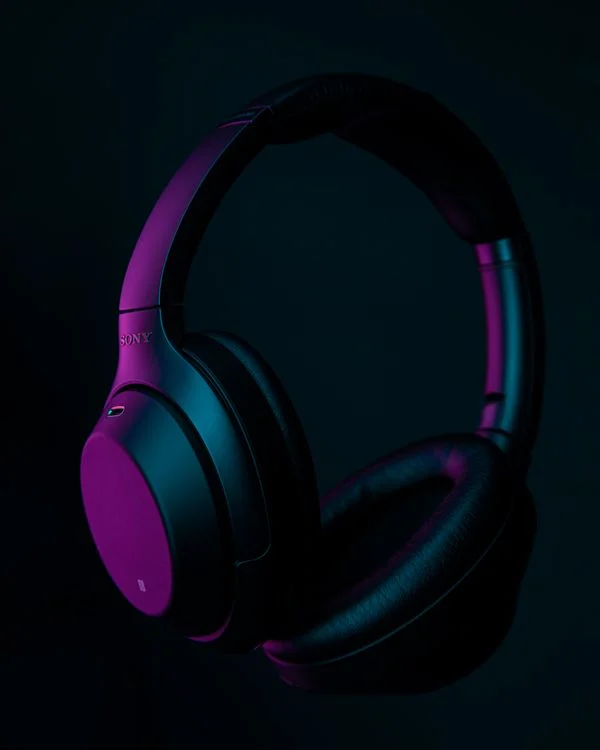
Why can’t noise-cancelling headphones create total silence?
No headphone creates a vacuum of sound. Some noise always remains because of physical fit, the frequency of the sound, the limits of the ANC system itself, and how quickly the environment changes (Shokz on the limits of noise cancelling). Think of ANC as a selective filter, not a mute button.
Two practical notes:
- The “pressure” feeling. Some people feel a sensation of fullness when ANC kicks in. It doesn’t necessarily mean air pressure is actually changing — and if it’s persistent or uncomfortable, turn ANC off and check with a hearing professional.
- Situational awareness. Reducing outside sound also reduces useful cues — traffic, train announcements, someone calling your name. That’s why many models include a transparency or ambient mode that pipes outside sound back in when you need it.
Where did noise-cancelling headphones come from?
The idea is nearly a century old. In 1936, German physicist Paul Lueg was granted US Patent 2,043,416 for silencing sound by generating an opposite-phase wave. In the 1950s, Lawrence J. Fogel patented systems for helicopter and airplane cockpits, and in 1957 Willard Meeker built a working ANC earmuff covering roughly 50–500 Hz with about 20 dB of maximum attenuation (history via Wikipedia’s active noise control article).
Consumer products took decades longer: the first commercial ANC headsets appeared in the late 1980s for aviation — Bose’s Series One Aviation headset arrived in 1989 — powered by bulky NiCad batteries or aircraft power (TechStuff on ANC’s history). Digital signal processing and efficient batteries eventually shrank the technology into the earbuds we use today.
How can you get the most out of noise cancellation?
- Get a good seal. Passive isolation and ANC work together — the better the fit, the less work the electronics have to do.
- Switch ANC on early, for example before takeoff, so the system settles in as the noise builds.
- Use transparency mode when walking near traffic or waiting for announcements.
- Remember it needs power. ANC is active processing, so it stops when the battery dies — the physical seal keeps working, but the anti-noise doesn’t.
Curious how other everyday tech works? Check out our other beginner-friendly explainers: What Is Refresh Rate? 60Hz vs 120Hz Explained“>What Is Refresh Rate: 60Hz vs 120Hz, Quantum Computing Basics: A Beginner’s Guide“>Quantum Computing Basics: A Beginner’s Guide, and iPhone Duo Explained: Apple’s First Foldable iPhone“>iPhone Duo Explained: Apple’s First Foldable.
Frequently asked questions
Do noise-cancelling headphones work without music playing?
Yes. ANC cancels ambient noise on its own — you can wear them with no audio playing and still hear engine rumble or HVAC hum fade, because the anti-noise system runs independently of your music.
What’s the difference between noise cancellation and noise isolation?
Noise isolation (passive) is physical: earcups, padding, and ear tips blocking sound mechanically. Noise cancellation (active/ANC) is electronic: microphones and signal processing generating anti-noise. Most modern headphones use both together.
Why can’t ANC fully block voices?
Speech constantly changes in pitch, timing, and volume, so the anti-noise can’t lock onto it the way it locks onto a steady engine drone. ANC can soften voices, but it won’t erase a conversation happening next to you.
Does noise cancellation use more battery?
Yes — ANC is active signal processing that needs power, which is why ANC stops working when the battery dies. Early commercial ANC headsets in the 1980s even required NiCad battery packs or aircraft power to run at all.
Why do my ears feel pressure with ANC on?
Many people notice a sensation of fullness when ANC engages. It doesn’t necessarily indicate a change in actual air pressure, and people experience it differently. If the feeling persists or bothers you, switch ANC off and consider talking to a hearing professional.

Developers, designers and marketers who build websites, software, apps and automations for businesses worldwide. Our editorial policy
2 comments