Bottom line: A foldable phone is a smartphone whose screen physically bends in half, so a device that fits in your pocket opens into a tablet-sized display. It works because flexible OLED displays are built on bendable plastic instead of rigid glass, topped with an ultra-thin sheet of real glass, and folded along a precision-engineered hinge. The trade-offs are price, a faint crease where the screen bends, and a more delicate display than a normal phone’s.
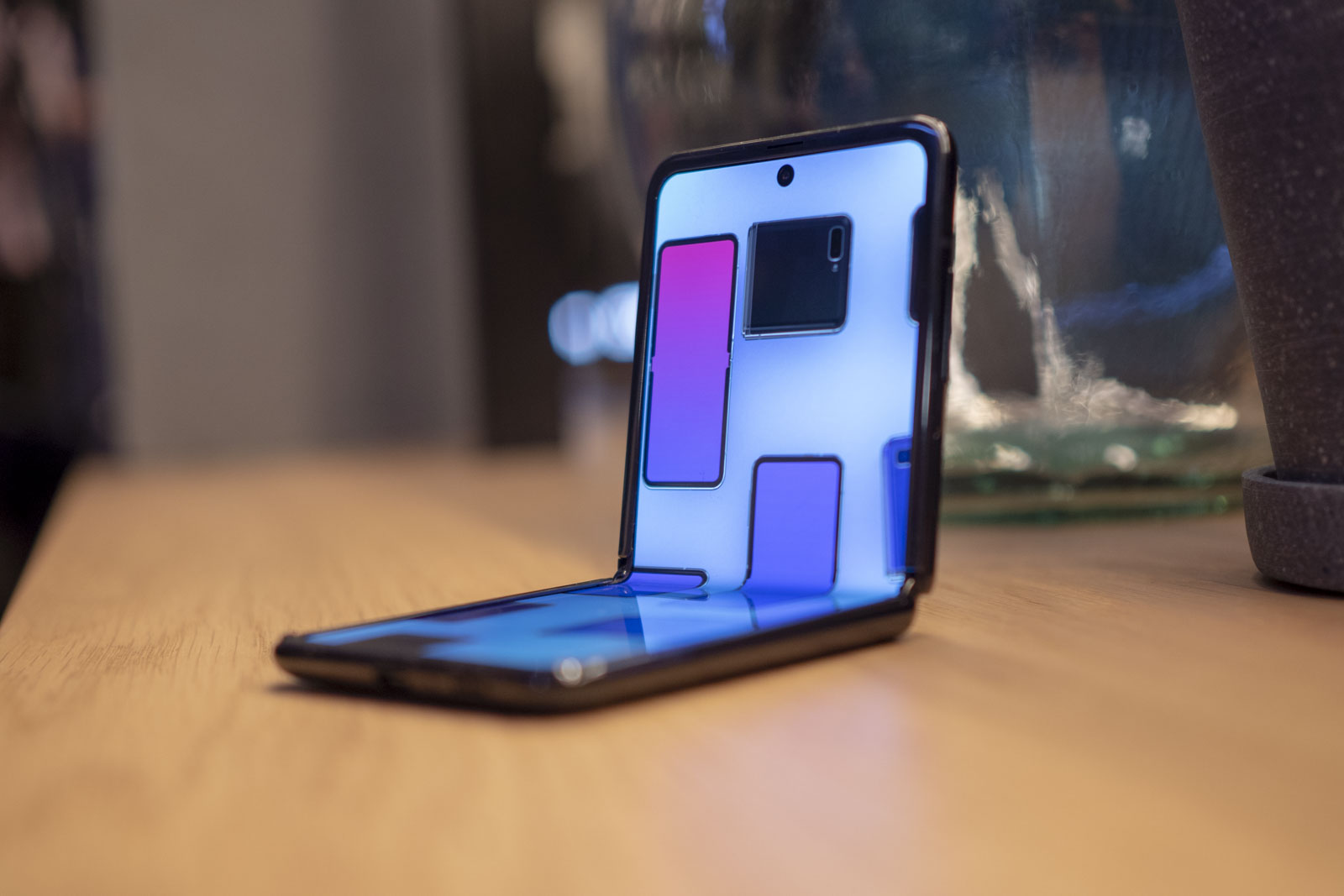
Definition: A foldable smartphone is a smartphone with a folding form factor in which the display itself bends, rather than using separate rigid screens joined by a hinge. The category includes book-style phones that open into tablets, clamshell flip phones, and newer tri-fold designs with two hinges.
Here is how the technology behind the bend actually works.
How does a folding screen actually work?
A flexible OLED on a plastic base
An ordinary phone screen is a sandwich of rigid glass; a foldable screen is a flexible one, and the key is flexible OLED technology. The display is built on a bendable plastic substrate (usually the polymer polyimide) instead of glass, with a thin-film transistor layer controlling power to each pixel and an organic light-emitting layer where every subpixel produces its own light. With no backlight needed, the whole stack is a fraction of a millimeter thick — thin enough to bend without shattering.
Flexible adhesives and protective polymer films hold the stack together while it bends. OLED is the same display family used in premium laptop screens — see Touchscreen MacBook Pro: Apple’s OLED Laptop Explained.

Ultra-thin glass: real glass that bends
Early foldables used soft plastic covers that scratched easily. In 2020, Samsung introduced ultra-thin glass (UTG) on the Galaxy Z Flip: real glass roughly 30 micrometers thick — about a third of a human hair — flexible enough to fold yet far tougher and more premium-feeling than plastic. UTG is now the norm on foldables.
The catch: that folding layer is still more delicate than a regular phone’s glass, so makers advise against pressing hard on the inner screen or removing the factory screen protector.
The hinge: where the magic (and the crease) lives
The hinge controls how the screen bends. Early foldables folded their displays into a tight U shape — sharp bend, visible crease, and a gap between the halves when closed. Modern designs use a waterdrop (teardrop) hinge that curls the display into a droplet shape, spreading stress across a wider curve like folding paper around a pencil instead of creasing it. The result: a shallower crease and no gap when closed.
The hinge is also the foldable’s most failure-prone part: the original 2019 Galaxy Fold was famously delayed for months after review units failed when dust crept past the hinge.
Software that keeps up
A foldable is two devices sharing one body, so the software has to adapt: apps continue seamlessly from cover screen to main screen, and many foldables run two or three apps side by side. See iOS 27 Explained: New Features in 27.1 and 27.2 for the OS-level side of this.
What types of foldable phones are there?
Not all foldables fold the same way. Four layouts have reached the market (outward-folding, where the screen wraps around the outside, was an interesting dead end — too vulnerable — and the industry standardized on inward-folding designs):
| Type | How it folds | Examples |
|---|---|---|
| Book-style | Folds inward like a book; a small cover screen on the outside handles quick tasks | Samsung Galaxy Z Fold, Google Pixel Fold |
| Clamshell (flip) | Folds in half horizontally into a compact square | Samsung Galaxy Z Flip, Motorola Razr |
| Outward-folding | The screen wraps around the outside of the device | Huawei Mate X |
| Tri-fold | Two hinges, unfolding into an even larger display (the Huawei Mate XT reaches 10.2 inches) | Huawei Mate XT |
A short history of the foldable phone
Concepts date back to 2008, but the market started in October 2018 with Royole’s FlexPai, the first commercial folding smartphone with an OLED display — clunky, but first. In 2019 Samsung launched and relaunched the Galaxy Fold, the first mass-market foldable; Huawei unveiled the Mate X; Motorola revived the Razr as a flip in November. 2020 brought the Galaxy Z Flip and ultra-thin glass; 2023 onward brought waterdrop hinges, gap-free designs, and Huawei’s tri-fold Mate XT. 2026 saw Apple enter the category with the iPhone Duo — see iPhone Duo Explained: Apple’s First Foldable iPhone.
Early foldables were dismissed as expensive gimmicks, and even now they account for only around 1% of worldwide smartphone ownership (2023) and under 2% of global shipments — but improved materials and hinges have made book-style and tri-fold designs practical alternatives to the standard phone.
What are the pros of a foldable phone?
- A tablet in your pocket. The first iPhone had a 3.5-inch screen; a book-style foldable like the Galaxy Z Fold7 opens out to an 8-inch display yet folds back into a pocketable phone.
- Real multitasking. The large inner screen fits two or three apps side by side: email next to a document, a map next to messages.
- Versatility. The cover screen handles quick glances; the inner screen handles videos, reading, and games.
What are the downsides?
- Price. As of 2025: book-style models around USD 1,800-1,900 (Galaxy Z Fold7, Pixel 10 Pro Fold), flips around USD 1,100 (Galaxy Z Flip7), and tri-folds up to USD 2,800 (Huawei Mate XT). (Source: ScienceABC)
- The crease. A faint line down the middle of the inner screen is unavoidable — it is physics, not a defect — though waterdrop hinges have made it much shallower.
- A softer screen. Even with ultra-thin glass, the folding display is more scratch-prone than a normal phone’s glass.
- Moving parts wear. Samsung has its folding displays certified to roughly 200,000 folds (verified by testing agency Bureau Veritas), which works out to several years of normal use — but the hinge and crease remain the likeliest wear points.
Should you buy a foldable phone?
Consider a foldable if you read, watch, or multitask heavily and want a bigger screen without carrying a tablet. Pick book-style for productivity and media, or a flip if you mainly want a compact phone that opens into a full-size screen.
Choose a regular flagship instead if you are price-sensitive, if a visible crease would bother you, or if you want maximum simplicity — the slab phone stays thinner, cheaper, and tougher. If you do buy a foldable, handle the inner screen gently and keep the factory protector on.
Frequently asked questions
Are foldable phones durable?
Much more than the fragile first generation. Samsung certifies its folding displays to roughly 200,000 folds (verified by Bureau Veritas) — several years of typical use. The inner screen is still softer than normal phone glass, so don’t press hard on it or remove the factory protector. (Source: ScienceABC)
Why do foldable phones have a crease?
Because bending any material concentrates stress along the fold line — the same reason a folded sheet of paper always shows a line. Waterdrop hinges reduce the stress by curving the display into a teardrop shape instead of a sharp U, making the crease shallower, but no foldable has eliminated it entirely.
What was the first foldable phone?
The Royole FlexPai, launched in China in October 2018, was the first commercially available folding smartphone with an OLED display. The first mass-market foldable was the Samsung Galaxy Fold, released in 2019. (Source: Wikipedia; Source: Digital Trends)
Are foldable screens glass or plastic?
Both. The display panel itself is a flexible OLED built on plastic, and since 2020 most foldables have topped it with ultra-thin glass (UTG) — real glass about 30 micrometers thick — which feels more premium and resists scratches better than plastic while still being able to bend. It remains more delicate than a regular phone’s rigid glass. (Source: ScienceABC)
Are foldable phones worth the price?
It depends on how much you value a bigger screen. Book-style foldables run roughly USD 1,800-1,900, flips around USD 1,100, and tri-folds up to USD 2,800 — a big premium over equivalent slab flagships. If you multitask, read, or watch a lot on your phone, the extra screen can justify it; if you mostly text and scroll, a regular phone is better value. (Source: ScienceABC, 2025 figures)
What is the difference between a book-style foldable and a flip phone?
A book-style foldable opens vertically into a tablet-sized display with a small cover screen for quick tasks — it maximizes screen size. A flip (clamshell) folds horizontally into a compact square and opens into a normal-sized phone screen — it maximizes portability. Book-style suits multitasking; flips suit people who want a smaller phone in the pocket. (Source: Wikipedia)

Developers, designers and marketers who build websites, software, apps and automations for businesses worldwide. Our editorial policy