
The short answer: AI data centers are consuming electricity faster than power plants can be built, and in parts of the United States that shortage is already landing on household bills. In the region served by grid operator PJM Interconnection, capacity auction prices jumped from $28.92 per megawatt-day to the $333.44 cap in two years — and the grid’s own market watchdog traced $6.5 billion of a single auction’s $16.4 billion cost to data centers, most of it for facilities that aren’t built yet. In this guide, we break down ai data center boom in plain English — what it is, how it works, and how to use it.
Why do AI data centers use so much electricity?
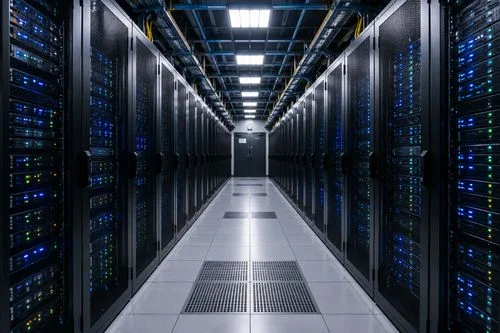
Start with the machine at the heart of it. An AI data center is a warehouse-scale building filled with racks of specialized computers — mostly GPUs (graphics processing units) — that train and run AI models. These chips run around the clock and generate enormous heat, so cooling takes almost as much electricity as the computing itself.
What makes an AI data center different from a normal one?
Two things: the chips and the duty cycle. GPUs draw far more power per rack than traditional processors, and AI facilities run flat-out 24 hours a day — idle minutes mean lost money on very expensive hardware. That constant, massive draw makes them a new kind of customer for power grids.
How big is the AI data center boom?
Analyst firm Gartner forecasts that global data center electricity consumption will reach 565 terawatt-hours in 2026, up 26% from 447 TWh in 2025 — and AI-optimized servers already account for nearly a third of that total, expected to overtake conventional servers in 2027 (Gartner, June 2026). Gartner’s analysts now describe power availability — not chips — as the binding constraint on AI expansion.
The International Energy Agency’s April 2026 analysis adds local focus: data centers are a few percent of global electricity use, but can be 20–30% of demand where they’re hosted — and the US holds about half of global installed capacity. The newest AI campuses under construction in the US range from 600 megawatts to 5 gigawatts each — equivalent to 600,000 to 5 million households per site (IEA figures summarized by Memeburn).
Your individual chatbot use is not the culprit. The IEA’s report notes Google measured a median Gemini text prompt at 0.24 watt-hours and OpenAI estimated an average ChatGPT query at 0.34 watt-hours (IEA figures summarized by Relevant Software). Basic chat is cheap; the huge demand comes from training giant models and running them at hyperscale. If you’re curious what everyday demand looks like, What Is an AI Copilot? Microsoft Copilot Guide explains how AI assistants became a daily habit — and part of the load.
How do data centers raise your electricity bill?
About 67 million people across 13 states and Washington, D.C. get power through the grid run by PJM Interconnection. PJM holds annual “capacity auctions” — markets where utilities pay power plants to guarantee they’ll be ready three years from now. Those payments flow into customer bills.
Reading the auction price table
| Delivery year | Clearing price (per MW-day) | What happened |
|---|---|---|
| 2024/25 | $28.92 | Normal market; supply comfortably exceeded demand |
| 2025/26 | $269.92 | Price jumped 9× as data center forecasts flooded in |
| 2026/27 | $329.17 | Hit the temporary price cap |
| 2027/28 | $333.44 | Hit the cap again; total auction cost $16.4B |
Forecast data center demand grew far faster than new power plants could be built, so the price of standby power exploded. PJM’s independent market watchdog, Monitoring Analytics, estimated data centers could add $6.3 billion to American energy bills within three years, and the December 2025 auction ran about $6.8 billion of its cost to data centers — roughly 40% (Fast Company, July 2026). The buildout has added roughly $29 billion in utility costs since 2024.
Are you paying for data centers that don’t exist yet?
Here is the part most coverage misses. When Monitoring Analytics broke down the December 2025 auction’s $16.4 billion, it traced $6.5 billion to data centers — and $6.2 billion of that to facilities not yet built (Global Data Center Hub, citing the PJM market monitor). A company can request a huge block of power before it pours a foundation, and the grid must plan for every request it receives, because under-planning risks blackouts. Asking for power is fast; building a power plant takes years.
Ohio tested what happens when asking has a price. In July 2025, state regulators approved a rule requiring AEP Ohio’s largest data center customers to pay for at least 85% of the power they reserve — whether they use it or not — for up to 12 years, with exit fees if they walk away. The utility’s reported request pipeline fell from more than 30 gigawatts to about 13 gigawatts. More than half the “demand” evaporated once it cost money to claim it (Global Data Center Hub).
Where is the backlash happening?
A Gallup survey of 1,000 US adults in March 2026 found 71% oppose building AI data centers in their local area — 48% strongly — a higher rejection rate than for new nuclear plants (53%), with 46% saying they worry “a great deal” about environmental impact (ConstructConnect, reporting Gallup). A Quinnipiac poll found 72% of opponents cite electricity costs (Startup Fortune).
The tension isn’t only American. In October 2026, Finland’s licensing authority ordered Google’s local subsidiary to halt environment-altering work at two planned data center sites (Muhos and Kajaani) after roughly 330 hectares were cleared near Muhos before mandatory environmental impact assessments were completed — despite secured grid capacity and a €13 billion investment commitment (TechTarget, October 2026). Power is only one bottleneck; permits and sovereignty are others. That sovereignty angle is explored in Sovereign AI Explained: Why Countries Want Their Own AI.
What can you actually do about your electricity bill?
Practical steps:
- Read the line items, not just the total. Your bill separates energy (the electricity you used) from delivery and capacity charges. Knowing which part is rising tells you whether it’s your usage or grid costs.
- Check for time-of-use or audit programs. Many utilities offer cheaper off-peak rates or free home energy audits — a 10-minute call can surface savings.
- Watch your state utility commission. Cost-allocation rules — like Ohio’s — are decided state by state, and commissions hold public comment periods. This is the one lever ordinary customers have over who pays for data center growth.
- Cut the big loads first. Heating, cooling, and water heating dominate most home bills. A programmable thermostat and sealed air leaks usually beat any gadget.
FAQs
Do data centers really make my electricity bill higher?
In regions with capacity markets — notably the 13-state PJM grid serving 67 million people — yes, measurably. PJM’s market watchdog traced $6.5 billion of one auction’s $16.4 billion cost to data centers, and analysts estimate about $29 billion in added utility costs since 2024.
How much electricity does one ChatGPT query use?
About 0.34 watt-hours, per OpenAI’s estimate cited in the IEA’s April 2026 analysis; Google measured a median Gemini text prompt at 0.24 watt-hours. Individual chatting isn’t what strains the grid — training large models and running AI services at hyperscale is.
Why do utilities charge me for data centers that aren’t built yet?
Grid operators must buy standby power covering every forecasted customer three years ahead, since under-buying risks blackouts — including data centers that exist only on paper. Ohio’s 2025 rule requiring large data centers to pay for 85% of reserved power cut its speculative pipeline from over 30 GW to about 13 GW.
What is a capacity auction?
A capacity auction is a market run by a grid operator such as PJM to buy guarantees from power plants that they will be available during future peak demand, typically a few years out. It pays for standby readiness rather than electricity consumed, and those costs are passed through to customer bills.
Can the grid run out of power because of AI?
Not overnight, but warning signs exist: PJM’s December 2025 auction fell 6,623 megawatts short of its reliability target — the first such shortfall — even at the price cap. Gartner now calls power availability the binding constraint on AI expansion.
What can I do to lower my electricity bill?
Read your bill’s line items; ask your utility about time-of-use rates and energy audits; join your state utility commission’s public proceedings; and cut the biggest home loads — heating, cooling, water heating.

Developers, designers and marketers who build websites, software, apps and automations for businesses worldwide. Our editorial policy