
Sovereign AI is a country’s ability to build, own, and control its own artificial intelligence — the chips, data centers, data, and AI models — instead of depending entirely on foreign companies. The term was popularized by NVIDIA CEO Jensen Huang, who argues that producing intelligence is becoming as strategically essential as producing energy. As of mid-2026, one global index tracks 185 sovereign AI projects across 67 government actors, with more than $83 billion in disclosed investment (Forkast/CNAS Sovereign AI Index). In this guide, we break down sovereign ai countries own in plain English — what it is, how it works, and how to use it.
But what does it actually mean for a country to “own” AI — and why are so many governments racing to do it? Let’s break it down.
Sovereign AI Countries Own: What Is Sovereign AI? (Simple Definition)
Sovereign AI is a nation’s capability to produce artificial intelligence using its own infrastructure, data, workforce, and business networks.
That definition comes from NVIDIA, whose chips power most of the world’s AI (Sherwood News). Red Hat puts it even more simply: a shift from renting AI to owning AI — keeping data local, controlling the technology, and making sure AI reflects a nation’s own values, culture, and laws.
Think of it like a national power grid. A country that imports all its electricity from one foreign supplier has no fallback if that supplier raises prices or cuts service. Sovereign AI applies the same logic to intelligence itself.
Where Did the Idea Come From?
The phrase “sovereign AI” was popularized by NVIDIA CEO Jensen Huang starting in late 2023. At the World Governments Summit in Dubai on February 12, 2024, Huang made the now-famous case: “Every country needs to own the production of their own intelligence… It codifies your culture, your society’s intelligence, your common sense, your history — you own your own data.”
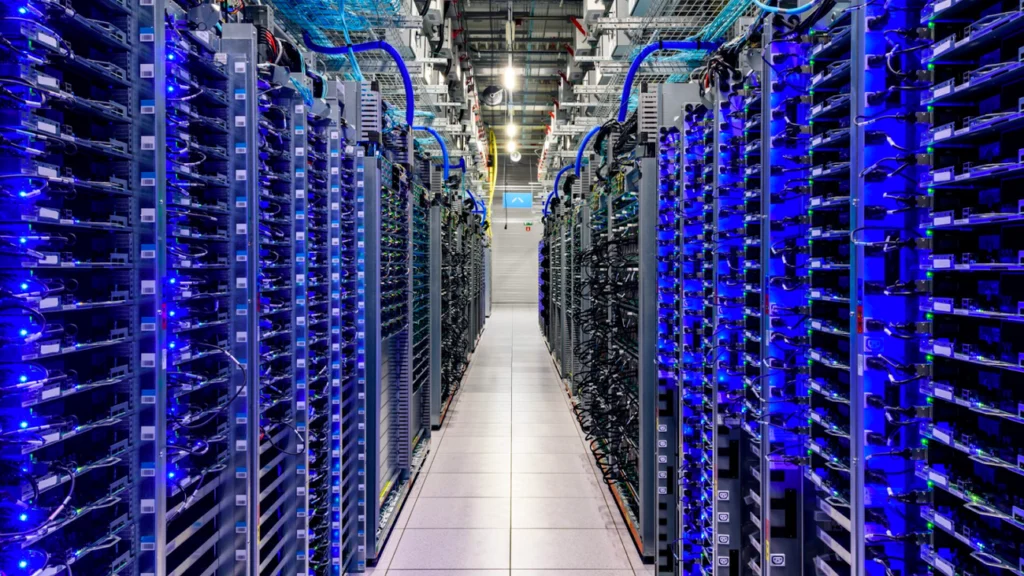
Huang also introduced the companion concept of the “AI factory” — a new kind of data center that takes raw data as its raw material and transforms it, using AI supercomputers, into valuable “tokens” — the outputs people experience on AI platforms (VentureBeat, February 2024). His warning: countries “can’t afford to export their country’s knowledge, their country’s culture, for somebody else to then resell AI back to them.”
What Are the Four Building Blocks of Sovereign AI?
Sovereign AI means controlling four layers of the AI stack:
| Layer | What it means | Why it matters |
|---|---|---|
| Compute / hardware | Nationally owned AI chips (mostly GPUs), data centers, networking, and energy | No foreign provider can cut off your processing power |
| Data | Training and operational data stored under local law | National records stay in-country |
| Models | AI models trained and maintained domestically | Intelligence reflects local language and culture |
| Operations | Inference servers and cloud control planes hosted locally | Day-to-day AI stays under national oversight |
Together they form a domestic “AI factory” — a full pipeline from raw compute to usable intelligence.
Which Countries Are Building Sovereign AI?
Dozens of countries are now in the race. Key players, based on the CNAS Sovereign AI Index data summarized by Forkast:
| Country / region | What’s happening |
|---|---|
| United Arab Emirates | Largest national spender at about $33.5 billion tracked investment. The Stargate UAE consortium targets 1 gigawatt of AI capacity, and the UAE’s Falcon models are leading open-weight AI models. |
| European Union | About $26.6 billion aggregate, including 13 AI Factories via EuroHPC and the InvestAI initiative targeting €200 billion. |
| France | €109 billion in AI pledges announced by President Macron at the February 2025 Paris AI Action Summit, including a €30–50 billion UAE commitment and €20 billion from Brookfield (Reuters). |
| Saudi Arabia | About $6.2 billion disclosed, with broader commitments approaching $100 billion through HUMAIN, the PIF-backed national AI infrastructure company. |
| India | The IndiaAI Mission (₹10,371 crore outlay) assembled a national pool of 34,333 GPUs at subsidized rates; Sarvam AI was selected to build a 120-billion-parameter sovereign model on Indian data (Bureaucrat News; IANS). |
| Denmark | The King of Denmark personally “plugged in” the Gefion supercomputer, powered by 1,528 NVIDIA H100 GPUs — a small nation buying sovereign compute (Sherwood News). |
Others are following the same playbook — South Korea, Switzerland, Japan, and Singapore are developing domestic models or securing compute under their own control, and open-weight models from China such as DeepSeek, Qwen, Kimi, and GLM are gaining rapid adoption outside the United States (Andrew Ng, DeepLearning.AI).
Why Do Countries Want Their Own AI?
The five big motivations:
- Strategic autonomy. Nations worry a foreign power could cut off AI access through export controls, sanctions, or vendor decisions. U.S. chip export restrictions have already limited which countries can buy advanced AI chips (DeepLearning.AI).
- Data control. Training AI on foreign clouds can expose national health, finance, and identity records to outside surveillance. Keeping data in-country keeps it under local law.
- Culture and language. A model trained mostly on English-language internet data doesn’t naturally understand Arabic nuance, Indian languages, or French legal context. Countries want AI that reflects their own society.
- Economic upside. Owning the AI stack keeps innovation, jobs, and intellectual property at home instead of paying rent to foreign tech giants.
- National security. As AI agents take on real responsibilities in government and industry, depending on foreign-controlled intelligence starts to look like depending on a foreign-controlled power grid.
What’s the Catch? The Honest Criticisms
Sovereign AI has serious skeptics, and their arguments are worth hearing:
- The vendor paradox. NVIDIA supplies the GPUs for 45% of all tracked sovereign AI projects, and four out of five foreign-partnered projects involve a U.S. company. Nations chasing AI independence are deepening dependence on American hardware (Forkast).
- The resource gap. Most countries lack the capital, energy, and talent to compete at the AI frontier. Full-stack sovereignty is impractical for the majority.
- The performance trade-off. For roughly 90% of standard AI applications, global-scale models trained on the broadest datasets beat smaller, nationally bounded alternatives.
- You don’t have to build everything. As AI pioneer Andrew Ng argues, the goal “isn’t to control everything; rather, it is to make sure no one else can control what you do with it.” Open-source software like Linux, Python, and PyTorch — and open-weight models — give nations cutting-edge AI without reinventing the whole stack (DeepLearning.AI).
What Does Sovereign AI Mean for Businesses and Individuals?
You don’t need to be a government to feel the effects. Sovereign AI programs are already delivering:
- More local model choices — AI that actually understands your language and local context, from Arabic-first models in the Gulf to Indic-language models in India.
- Data residency options — businesses in regulated industries may soon pick AI services whose data never leaves their country.
- Cheaper compute — programs like India’s subsidized national GPU pool lower the cost of building AI products for local startups.
If you’re evaluating AI tools for your own business, start with the practical side: AI Model Tiers: Free vs Plus vs Pro vs Ultra (2026)“>how AI model pricing tiers work, and how assistants like What Is an AI Copilot? Microsoft Copilot Guide“>Microsoft Copilot fit into daily workflows.
Sovereign AI: Frequently Asked Questions
What is sovereign AI in simple terms?
Sovereign AI means a country owns and controls its own AI capabilities — the computer chips, data centers, data, and AI models — instead of relying entirely on foreign companies.
Which countries are investing in sovereign AI?
The UAE leads with about $33.5 billion in tracked investment, followed by the EU ($26.6 billion), Saudi Arabia, India, and France — which pledged €109 billion at its 2025 AI summit.
Is sovereign AI the same as data sovereignty?
Not quite. Data sovereignty is about keeping data under a country’s laws — it’s one layer of the picture. Sovereign AI is broader: it also covers owning the computing hardware, training the models, and operating the AI services.
Can a small country really build its own AI?
Full independence is impractical for most nations — the chips are designed in the U.S. and made in Taiwan, and frontier models cost billions to train. But smaller countries can buy national supercomputers (like Denmark’s Gefion), fund local-language models, or build on open-weight models. The pragmatic goal is resilience, not total self-sufficiency.
Does sovereign AI mean banning foreign AI tools like ChatGPT?
No. Most sovereign AI strategies run in parallel with foreign services rather than replacing them. The aim is to have a domestic alternative for critical uses — government, healthcare, national security — while citizens and businesses keep using global tools. Some analysts even recommend focusing on customizing global models for local needs instead of rebuilding everything.
The Bottom Line
Sovereign AI is the idea that intelligence — like energy or food — is too important for any nation to import entirely from someone else. Whether countries build full AI factories or simply secure open, resilient alternatives, the direction is clear: the next phase of the AI race will be fought between countries, not just companies. And as Andrew Ng puts it, the open-source community may be the cheapest and most powerful tool nations have to stay in the game.

Developers, designers and marketers who build websites, software, apps and automations for businesses worldwide. Our editorial policy