
RAG — retrieval-augmented generation — is a technique that lets a large language model (LLM) look up information in an external knowledge base before answering your question. Instead of relying only on what it memorized during training, the model first retrieves the most relevant documents, then generates an answer grounded in them. The approach was introduced in a 2020 research paper by Patrick Lewis and colleagues, and today it powers chatbots that answer from company documents — sharply reducing the confident-but-wrong answers known as AI hallucinations. In this guide, we break down what is rag in plain English — what it is, how it works, and how to use it.
Definition: Retrieval-augmented generation (RAG) is an AI framework that improves a large language model’s answers by retrieving relevant information from an external, authoritative knowledge base at query time and feeding it to the model as context before it generates a response.
What Is Rag: What does RAG stand for?
RAG stands for retrieval-augmented generation. Each word describes one job in the pipeline: retrieval (find the relevant documents), augmented (add them to the model’s prompt), and generation (produce the final answer). The term was coined in the paper “Retrieval-Augmented Generation for Knowledge-Intensive NLP Tasks” (Lewis et al., 2020), which described combining a pre-trained language model with a non-parametric memory — a dense vector index of Wikipedia accessed through a neural retriever — instead of forcing all knowledge into the model’s trained weights.
What problem does RAG solve?
Large language models have two hard limits that RAG was built to fix:
- Frozen knowledge. A model’s training data ends at a cutoff date, so it knows nothing about what happened afterward.
- No private knowledge. Your internal wiki, support tickets, product manuals, and customer policies were never in any public training set, so the model can’t answer from them.
When you ask about something the model doesn’t know, it doesn’t say “I don’t know” — it often invents a plausible-sounding answer. These fabrications are called hallucinations, and they are one of the biggest barriers to using AI in business. As Ars Technica put it (via Wikipedia’s overview), RAG improves LLM performance “by blending the LLM process with a web search or other document look-up process to help LLMs stick to the facts.” It also means new information only needs to be added to the knowledge base — not baked into the model through expensive retraining.
How does RAG work, step by step?
A RAG system runs the same four-stage loop for every question:
1. Index — turn your documents into searchable chunks
Documents are split into smaller passages, converted into embeddings (numerical representations of meaning), and stored in a vector database built for similarity search.
2. Retrieve — find the relevant passages
Your question is embedded the same way, and the retriever pulls the chunks whose meanings are closest to it — sometimes combined with classic keyword search in a technique called hybrid search.
3. Augment — stuff the context into the prompt
The retrieved passages are added to the model’s input alongside your question. This technique has been called “prompt stuffing”: it puts key information early in the prompt so the model prioritizes the supplied documents over its older training knowledge.
4. Generate — write the grounded answer
The LLM synthesizes an answer from the augmented prompt, drawing on both the retrieved evidence and its own language abilities. Because it can cite the documents it used, you can verify where the answer came from.

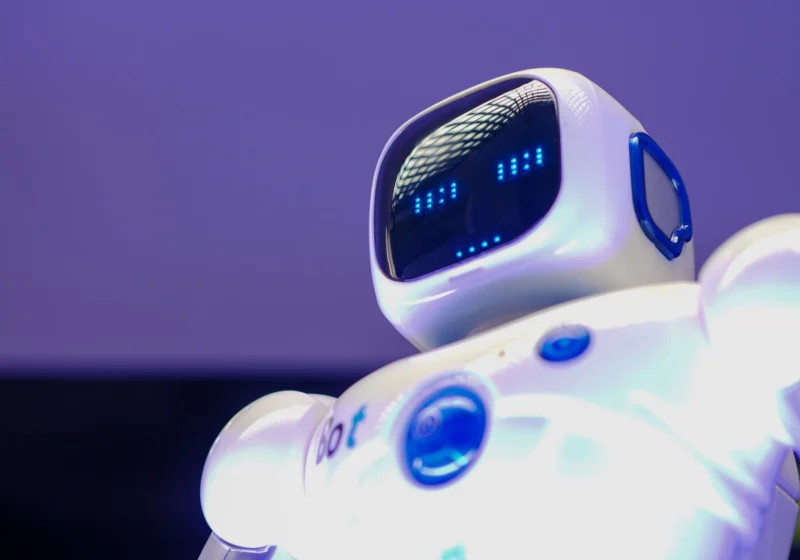
Photo by Aaron King on Pexels
How does RAG reduce hallucinations?
Hallucinations happen when a model answers from memory and memory fails. RAG changes the dynamic: the model reasons over documents placed in front of it, so its answer is anchored to real, checkable text. IBM lists lower hallucination risk, access to current domain-specific data, and greater user trust among RAG’s main benefits — and because responses can include sources, readers can cross-check them. If you’re evaluating how reliable a grounded answer is, AI Benchmarks Explained: MMLU, GPQA & MemoryBench“>AI benchmarks that measure factuality are the right yardstick.
RAG vs fine-tuning: what’s the difference?
Both techniques adapt an AI model to your needs, but they solve different problems:
| RAG | Fine-tuning | |
|---|---|---|
| What changes | The external knowledge base | The model’s weights |
| Cost of updates | Low — just add or re-index documents | High — requires retraining runs |
| Best for | Factual, current, or private knowledge | Tone, style, behavior, specialized reasoning |
| Hallucinations | Reduced — answers are grounded in retrieved sources | Not directly addressed |
| Transparency | Can cite the documents used | No trace of where an answer came from |
Think of it this way: RAG is like giving a smart employee access to your filing cabinet; fine-tuning is like sending them to training school. Most production AI assistants need a bit of both.
Where is RAG used in the real world?
Anywhere an AI assistant must answer from specific, trusted material:
- Customer-support chatbots that answer from help-center articles and policy docs instead of guessing.
- Internal company assistants that search wikis, tickets, and manuals — Wikipedia notes this as one of RAG’s defining use cases.
- Meeting and workplace AI — for example, Zoom describes RAG as the foundation of AI features that ground answers in a user’s actual meetings and documents.
- Content workflows — writers and marketers using AI Content Creation: A Business Owner’s Starter Guide“>AI for content creation can ground drafts in brand guidelines and source material.
- Healthcare research, where studies have explored grounding model outputs in external medical knowledge sources — though reviewers stress that evaluation and reliability challenges remain.

Image: AI-generated illustration by Alenoach, released to the public domain (CC0) via Wikimedia Commons
What are the limitations of RAG?
RAG is a major improvement, but it is not a truth guarantee:
- It doesn’t eliminate hallucinations. A model can still hallucinate around good sources. MIT Technology Review reported a case where an AI pulled a rhetorical chapter title from a book — “Barack Hussein Obama: America’s First Muslim President?” — and stated as fact that the US had a Muslim president named Barack Hussein Obama. The retrieval was correct; the interpretation was wrong.
- Conflicting sources confuse it. When documents disagree, the model can merge outdated and updated information into a misleading blend.
- Garbage in, garbage out. If your knowledge base is stale or low quality, grounded answers will be too — which is why How Enterprises Govern AI: Guardrails & Prompt Security“>governing AI data and guardrails matters.
- It doesn’t remove retraining entirely. RAG handles knowledge; improving a model’s underlying reasoning still takes training.
How do I get started with RAG?
You don’t need a research lab. A minimal RAG setup follows the four stages above:
- Gather documents — help articles, PDFs, wikis, manuals. Quality beats quantity.
- Chunk and embed them — split into passages and store their embeddings in a vector database.
- Wire up retrieval — embed each user question and fetch the top matching chunks.
- Prompt carefully — instruct the model to answer only from the retrieved context and to say when the documents don’t contain an answer.
- Measure and iterate — track which questions retrieve poor context; retrieval quality, not model size, usually decides answer quality.
Frequently asked questions
What does RAG stand for?
RAG stands for retrieval-augmented generation: an AI technique where a language model retrieves relevant documents before generating its answer.
How does RAG reduce AI hallucinations?
By grounding answers in retrieved documents, RAG gives the model real, checkable evidence to reason over instead of relying purely on memorized training data. It reduces — but does not eliminate — hallucinations, since a model can still misinterpret correct sources.
Is RAG better than fine-tuning?
Neither is universally better. Use RAG when the model needs factual, current, or private knowledge; use fine-tuning when you need to change its behavior, tone, or style. Many real systems use both.
Who invented RAG?
The term and technique come from the 2020 paper “Retrieval-Augmented Generation for Knowledge-Intensive NLP Tasks” by Patrick Lewis, Ethan Perez, Aleksandra Piktus, and colleagues at Facebook AI Research, UCL, and NYU, presented at NeurIPS 2020.
Does RAG completely stop AI from making mistakes?
No. RAG grounds answers in real documents, but models can misread context, merge conflicting sources, or answer when they should say they don’t know. Source quality and retrieval accuracy remain the weak links.

Developers, designers and marketers who build websites, software, apps and automations for businesses worldwide. Our editorial policy

1 comment